CHEMISTRY 132, GENERAL CHEMISTRY
SECTION 001, DR. W. STEINMETZ
UNIVERSITY OF NORTH CAROLINA,
ASHEVILLE
COURSE HOME PAGE
1.) Course Syllabus
2.) Handouts
b) Supplemental Instruction (SI) Program
c) Material to be covered on first midterm
exam
d) Material to be covered on the second
midterm exam
g) First Law of Thermodynamics
h) Second Law of Thermodynamics
j) Classes of Chemical Reactions
l) Table of Interhalogen Compounds
3.) Homework
a) Homework assigned on 21 & 23 August
b) Homework assigned on 29 Aug.
c) Homework assigned on 9 Sep.
d) Comment on Problem 3.111 from McMurry & Fay dealing with lattice energies
e) Homework assigned on 30 Oct (classes of reactions)
4.) Group Problems
a) Week 1: units and significant
digits
c) Week 3: properties of the hydrogen
atom
e)
Week 5: Lewis electron-dot structures
f) Week 6: hybridization and extended valence
h) Week 8: acid-base and
precipitation reactions
j)
Week
10: First and Second Law of Thermodynamics
k)
Week 11: Second Law of
Thermodynamics and Acids/Bases (last set)
5.) Figures
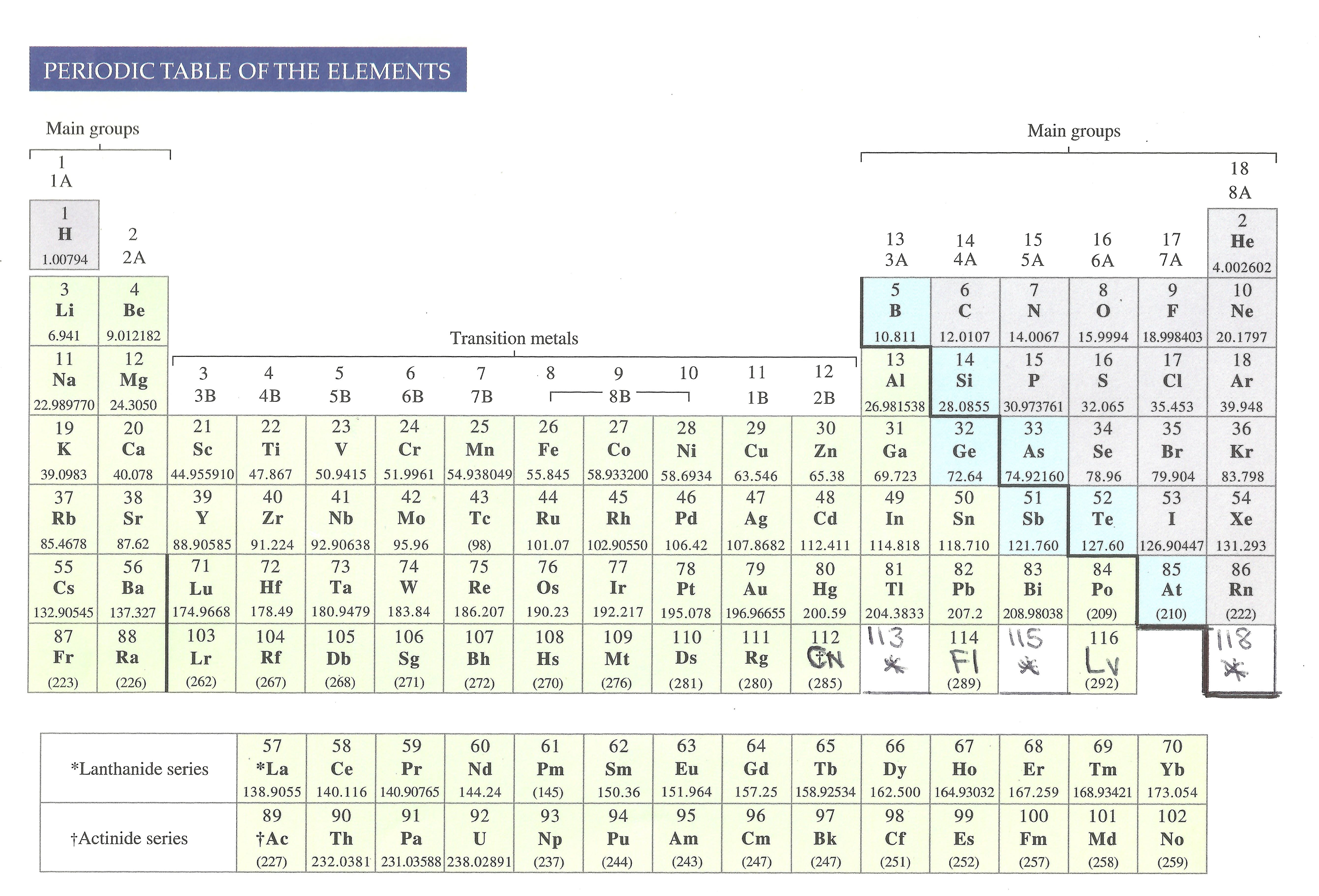
a) Periodic table of the elements, current list on August, 2013
b) Atomic Orbitals (figure showing spherical harmonics)
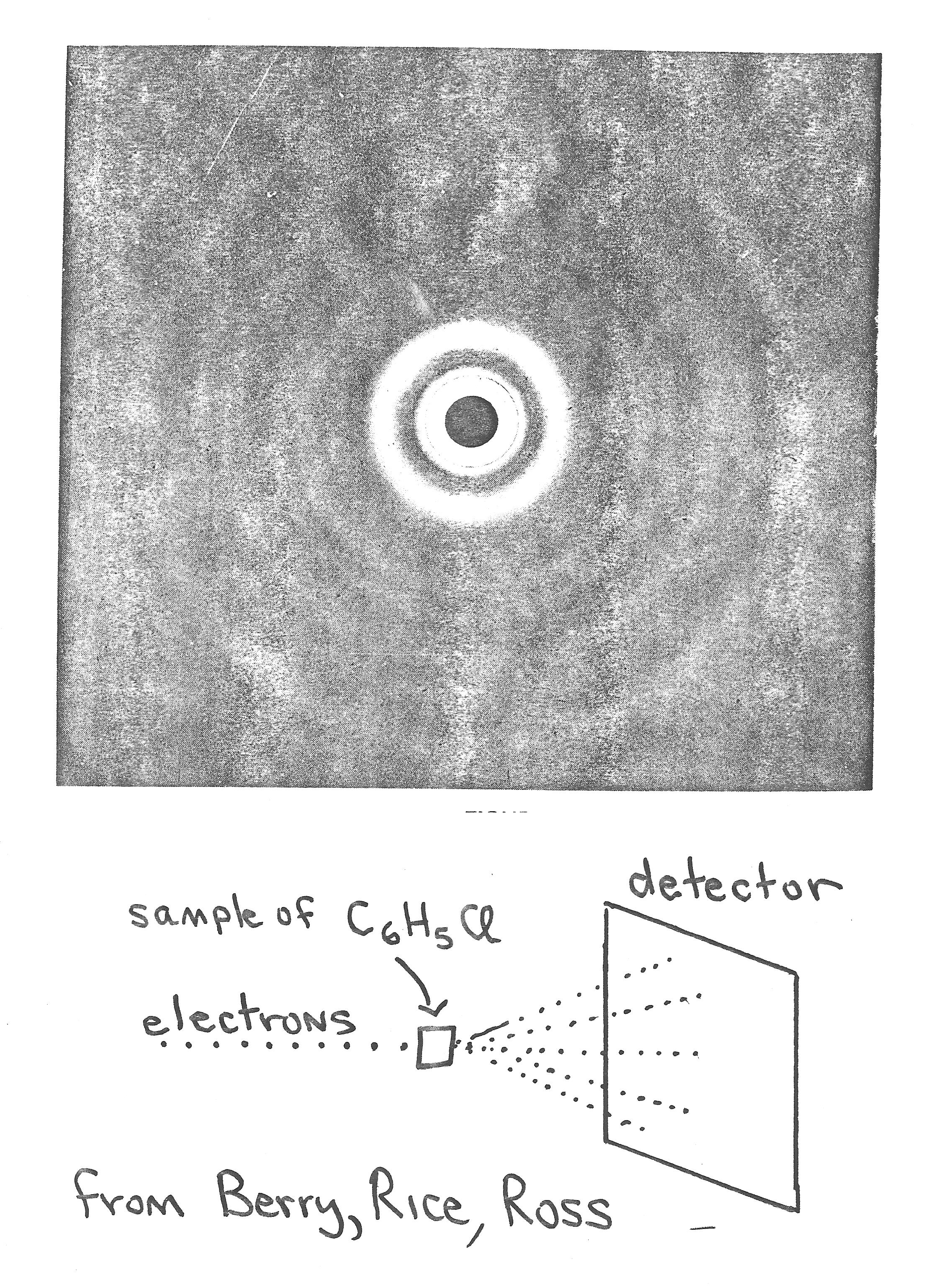
c) Electron diffraction of chlorobenzene. The figure shows interference fringes which demonstrates the wavelike character of the electron.
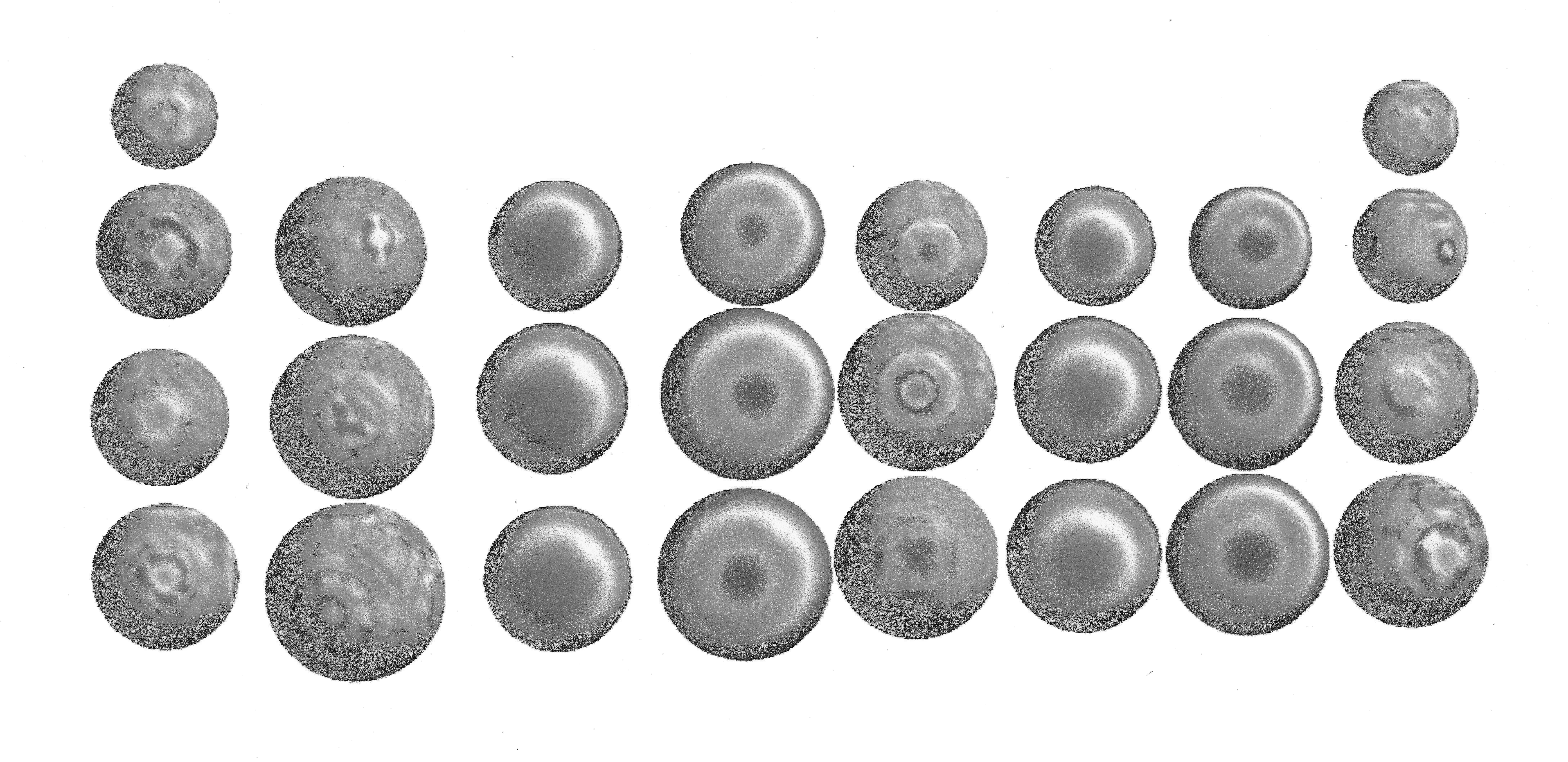
d) Atomic radii. Atomic radii of the elements in the first three periods of the periodic table. The surface in each case is the locus of points where the value of the normalized wave function is 0.002. The probability of finding the atom’s electrons on or inside the surface is 97 to 99%. The surfaces were calculated using Spartan via Density Functional Theory calculation with a B3LYP functional and a6-31G** basis set.
e) The 8 ionization energies (IE) in kJ/mole of atomic oxygen. The striking increase for the removal of the 7th and 8th electrons validates the shell model.
6.) Solutions to quizzes and exams
a) First quiz
b) Second quiz
c) Third quiz
d) Fourth quiz
e) Fifth quiz
f) Sixth quiz
g) Seventh quiz
h) Eighth quiz
i)
Ninth quiz
j)
Tenth quiz (last quiz)
Last revised, 22 November 2013